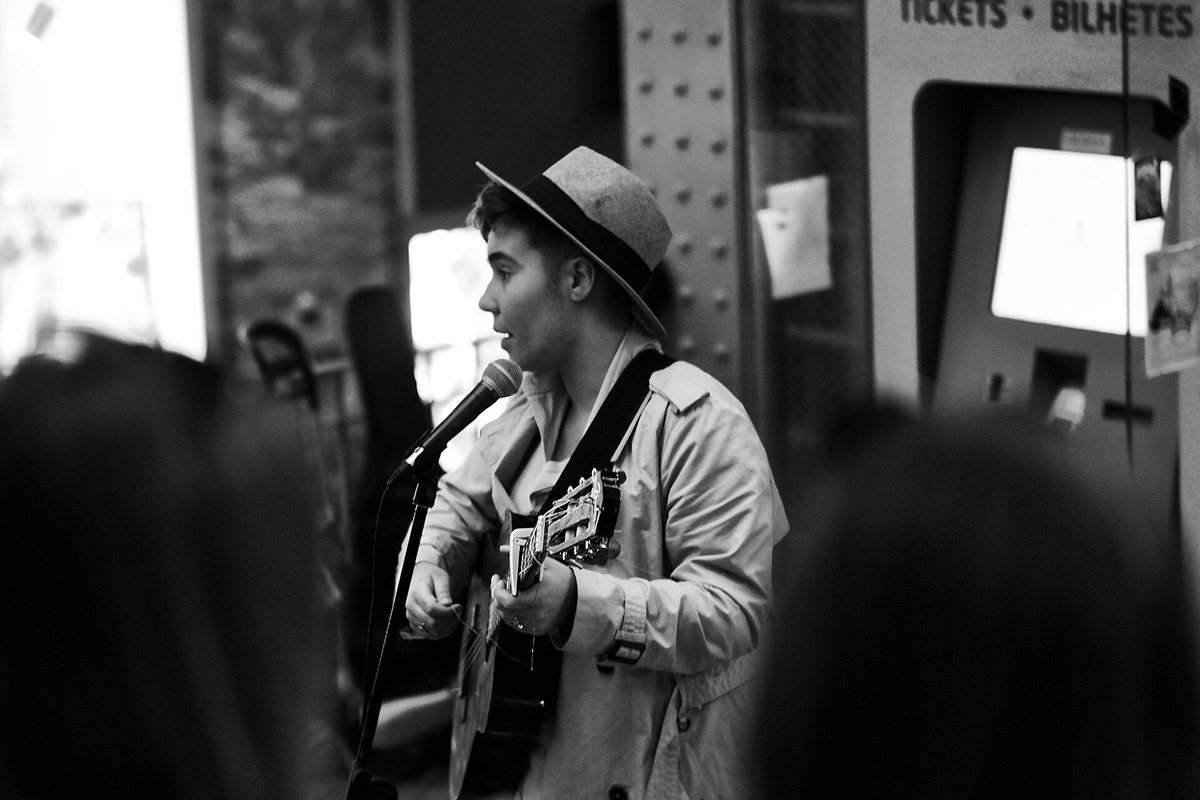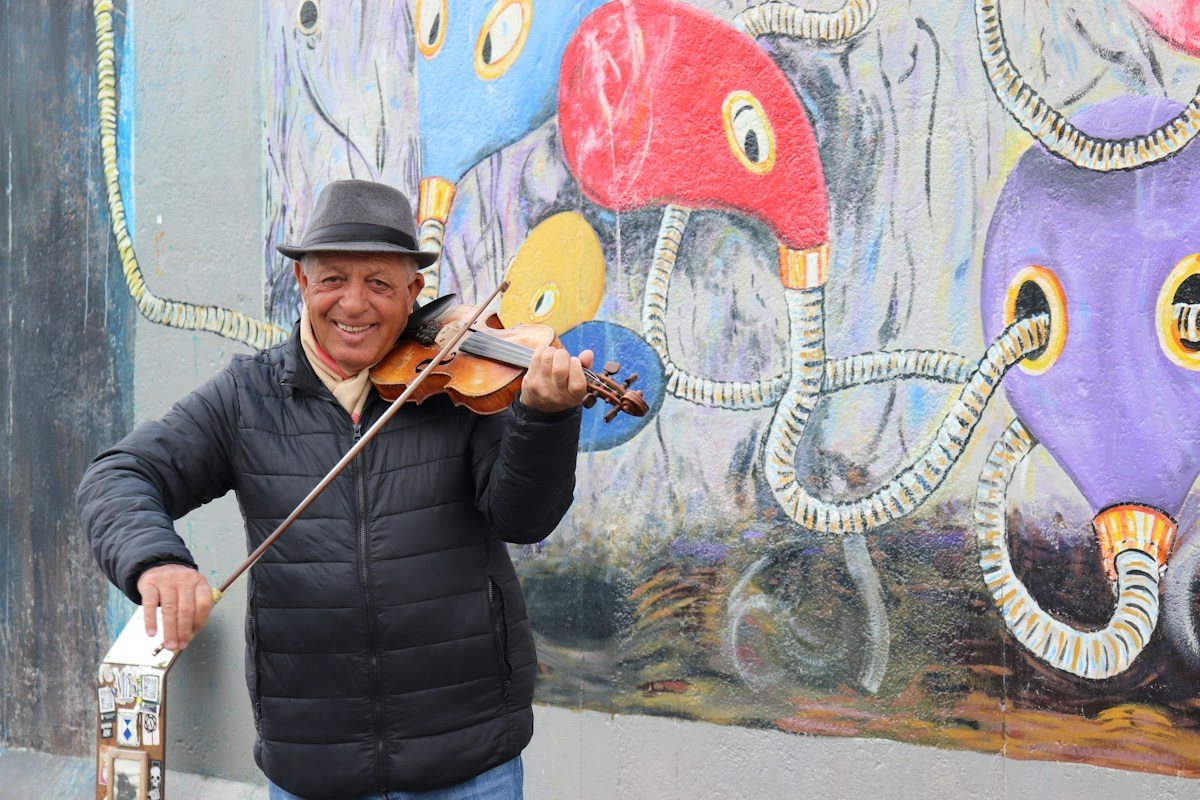
The tune finishes and the musician bends toward a case. A few listeners applaud; others take the opportunity to leave. The neat story of a performance would cut here. Yet the next minute can reveal how much work has been holding the previous five together.
A string needs attention. A page has slipped in the wind. Somebody asks for a song, and the answer is a friendly no. The performer is arranging the practical conditions for another piece while remaining available to an audience that could disappear at any moment.
Listen to the tuning without treating it as incompetence. Instruments change, hands get cold, and an exposed setting gives a musician plenty to manage. In a recording, such adjustments are usually removed. On the street, you can see the maintenance that makes the music possible.
The pause also gives an audience a chance to be considerate. If you want to ask a short question, wait until the musician seems free. A lowered instrument isn't automatically an invitation to a conversation that will consume the whole break. Sometimes the most generous response is to let someone drink their water.
Then a first note gathers the remaining listeners. Someone who arrived during the silence turns around. The performance begins again, with a slightly different audience and a slightly different street. Once you have noticed that small act of rebuilding, the gap between songs stops sounding empty.