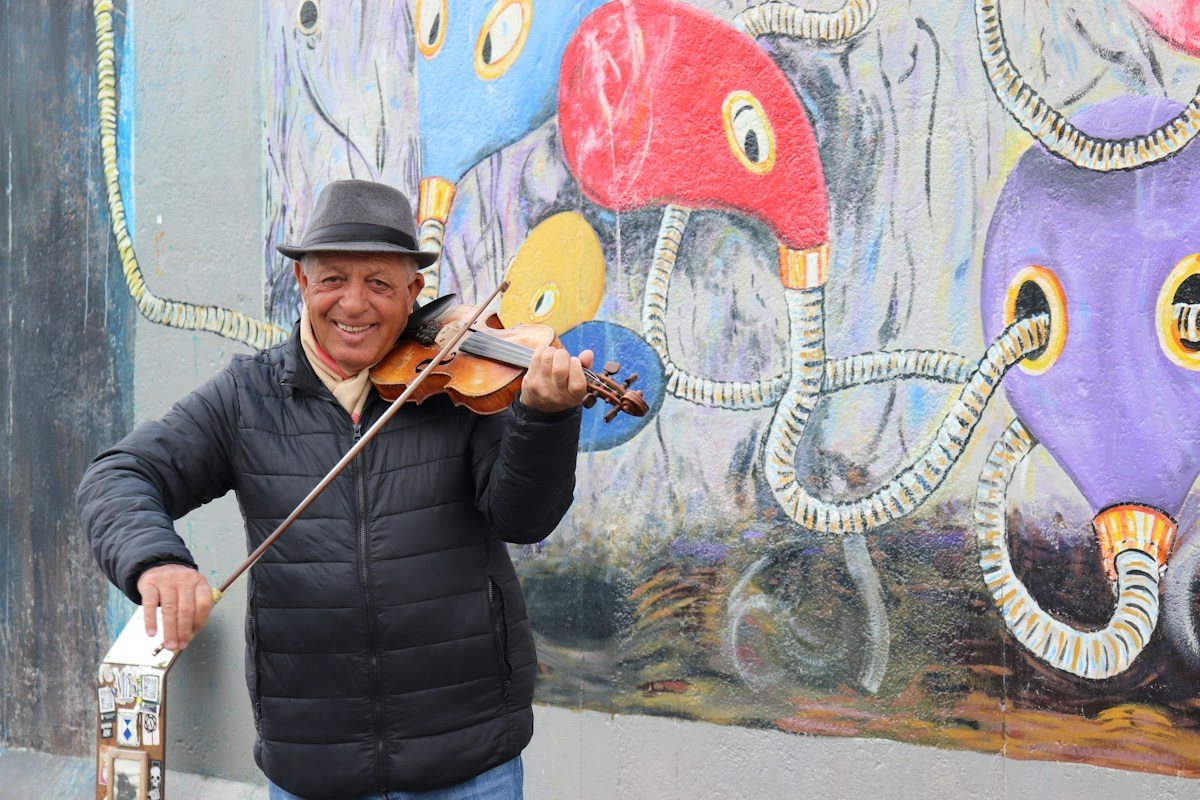
There is no hush before the first note. Someone is ordering coffee, a bicycle bell rings, and the violin begins in the middle of an already active world. A concert hall normally helps tell an audience when to pay attention. Outdoors, the player has to make that invitation through the sound itself.
At close range, you may hear details that a more distant seat would blend together: the start of a bow stroke, the change between a sustained line and a quick run, a breath the musician takes before a demanding phrase. These sounds needn't be treated as flaws. They make the physical work audible.
Don't assume the repertoire from the instrument. A violin can lead you toward many kinds of music. If you recognize the melody, listen for how the player phrases it rather than waiting for the version you know. If you don't, you can still follow returns, contrasts, and the point where a phrase seems to find its way home.
Space is part of the courtesy. A bow needs room. So do people passing behind an audience. Avoid moving closer merely to fill a camera frame, especially when the performer is absorbed in the piece.
When you later hear a violin indoors, the outside performance may stay with you. The polished room and the noisy pavement don't cancel each other. They offer different ways to notice the same instrument's capacity to draw a line through the air and persuade someone to follow it.